Playboy

Long before I moved to San Francisco and the AIDS epidemic began, I was a student at the University of South Florida in Tampa. It was the year before the Stonewall riots and I went into the dorm lounge one night, hoping to join a card game, and discovered several Playboys laying on a table. One of the guys had a subscription and after taping the centerfolds to his bedroom wall, left the rest of the magazines laying around.
I’d glanced at one before, but seeing the photos of naked women, had put it down. This time I sat and read an interview with Jim Garrison, a District Attorney from New Orleans, who was convinced that President Kennedy hadn’t been assassinated by Lee Harvey Oswald alone. I didn’t know if I believed that, but it was interesting, so kept on reading about Norman Mailer joining an anti-war march on the Pentagon, and an article about the future of computers. I began to look for other discarded Playboys and several weeks later someone left a pile of them in the lounge and I took them back to my room.
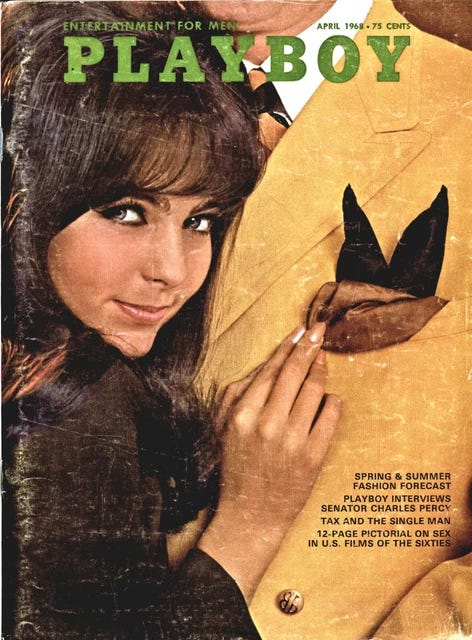
In the Playboy Forum section of the magazine were Letters to the Editor, and I found one saying marijuana should be legal, another referencing something called The Kinsey Report, and a book from 1956 titled, Sexual Behavior in the Human Male. I tried to find a copy of at the University Library, but they didn’t have one, though I did discover several articles on microfiche describing the Kinsey Scale, which was a way to measure a person’s overall balance of heterosexuality and homosexuality. I was both amazed and relieved to read anything about homosexuality that said some people were completely heterosexual and others were completely homosexual, which I thought I was. The scale also theorized that some people were attracted to both men and women while others were cited as being asexual, meaning they didn’t have any sexual contacts at all, which was also definitely me at that time. I left the library feeling more hopeful, just knowing that there had to be others like me, some of whom might be right there at the University.
Over the next few days I continued looking through my collection of Playboys. There was a column in each issue called Sex in the Cinema where I found half-naked photos of Hollywood movie stars like George Peppard and Sean Connery. One caption mentioned a film called Tea and Sympathy, which was based on a play with the same name, about a student who was bullied for being effeminate. The library had the play, which told the story of a shy 17-year-old who didn’t hang out with other boys and was more interested in music and art than sports. His classmates bullied him, called him “Sister Boy” and queer and fairy, making his life miserable. He considers suicide and then visits the town’s prostitute, but finally has sex for the first time with the one person who is really kind to him, the headmaster’s wife. She feels bad about the way he’s being treated and decides to become his friend and eventually his first sexual encounter. I definitely understood the boy’s loneliness, and imagined how great it would be to meet someone who could reassure me there was nothing wrong with who I was.
I grew up on Playboys. My dad had a subscription and he gifted me one, I guess hoping I would not turn out to be a sister boy. It was such a well-written font of information, literature and art. The Sex in the Cinema features were awesome. People would dismiss it offhand, but it was much more than naked centerfolds.